

Most people understand that sleep is important. We know we feel better after a good night's rest and we recognize that being tired can make the next day more difficult. Yet many people underestimate just how much poor sleep affects their physical health, emotional well-being and daily functioning.
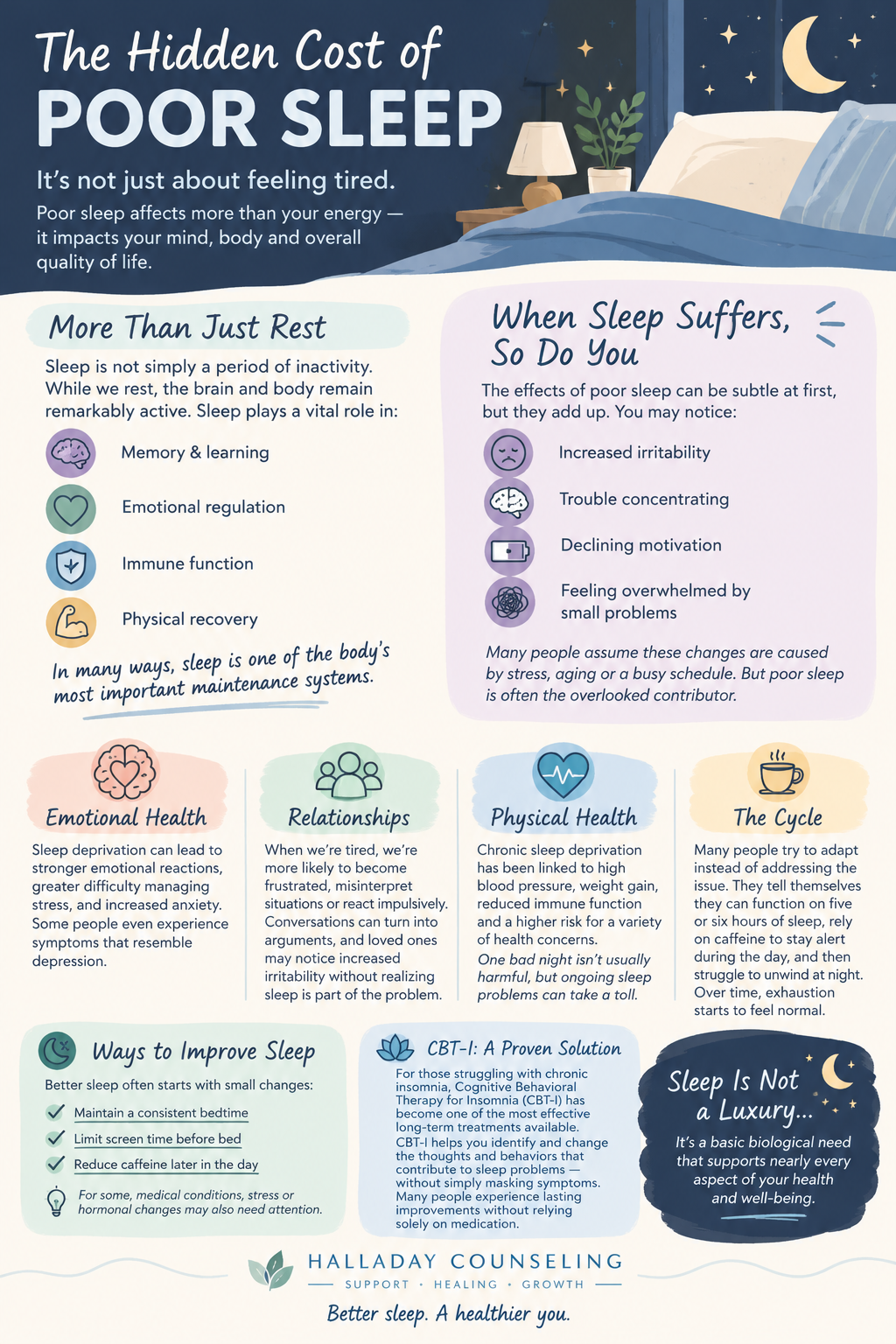
Sleep is not simply a period of inactivity. While we rest, the brain and body remain remarkably active. Sleep plays an important role in memory, learning, emotional regulation, immune function and physical recovery. In many ways, it is one of the body's most important maintenance systems.
When sleep is disrupted, those systems begin to suffer.
The effects are often subtle at first. A person may become more irritable than usual. Concentration may become more difficult. Motivation may decline. Small inconveniences that would normally be manageable can suddenly feel overwhelming. Many people assume these changes are caused by stress, aging or a busy schedule. While those factors certainly play a role, poor sleep is often an overlooked contributor.
One of the first areas affected by inadequate sleep is emotional health. People who are sleep deprived tend to experience stronger emotional reactions and greater difficulty managing stress. Problems feel bigger. Patience becomes harder to maintain. Anxiety often increases. Some people even begin to experience symptoms that resemble depression.
Poor sleep can also affect relationships. When people are tired, they are more likely to become frustrated, misinterpret situations or react impulsively. Conversations that would normally remain calm can turn into arguments. Family members, coworkers and friends may notice increased irritability without realizing sleep is part of the problem.
The physical consequences can be significant as well. Chronic sleep deprivation has been linked to high blood pressure, weight gain, reduced immune function and increased risk for a variety of health concerns. While one bad night of sleep is usually not harmful, ongoing sleep problems can gradually take a toll on overall health.
Unfortunately, many people try to adapt rather than address the issue. They tell themselves they can function on five or six hours of sleep. They rely on caffeine to stay alert during the day and then struggle to unwind at night. Over time, exhaustion becomes so familiar that it starts to feel normal.
Improving sleep often begins with simple changes such as maintaining a consistent bedtime, limiting screen time before bed and reducing caffeine later in the day. For some individuals, medical conditions, stress or hormonal changes may also need attention.
For people struggling with chronic insomnia, Cognitive Behavioral Therapy for Insomnia, often called CBT-I, has become one of the most effective long-term treatments available. CBT-I helps people identify and change thoughts and behaviors that contribute to sleep problems. Rather than simply masking symptoms, it addresses habits and patterns that interfere with restful sleep. Many people experience lasting improvements without relying solely on medication.
One of the most important things people can do is stop viewing sleep as a luxury. Sleep is not something we earn after everything else is finished. It is a basic biological need that supports nearly every aspect of health and well-being.
The next time you find yourself feeling overwhelmed, irritable or emotionally drained, ask yourself a simple question: How well have I been sleeping? The answer may reveal more than you think.
